 Birch Bay Siding
 Roofing on Sandy Point: A Different Set of Problems Than Inland Whatcom County
Sandy Point sits right up against the water, and that changes what a roof has to survive. A few miles inland in Whatcom County, a roof mostly deals with rain volume and the occasional windstorm. Out here, you're adding salt-laden air, near-constant onshore wind, and a moss season that runs longer than almost anywhere else in the state. Any one of those is manageable. All three at once, on the same roof, year after year, is what actually shortens roof life on this stretch of coastline.
We install new roofs for homeowners in Sandy Point and the surrounding Birch Bay area, and the specs we use reflect that environment specifically. A roofing system sized for a subdivision in Bellingham's south hill isn't automatically right for a place where the wind carries salt spray onto the shingles and the roof rarely gets a long enough dry stretch to fully shed moss growth. This page covers what actually goes into a correct new roof installation for a Sandy Point home, why we build it the way we do, and what to expect from the process.
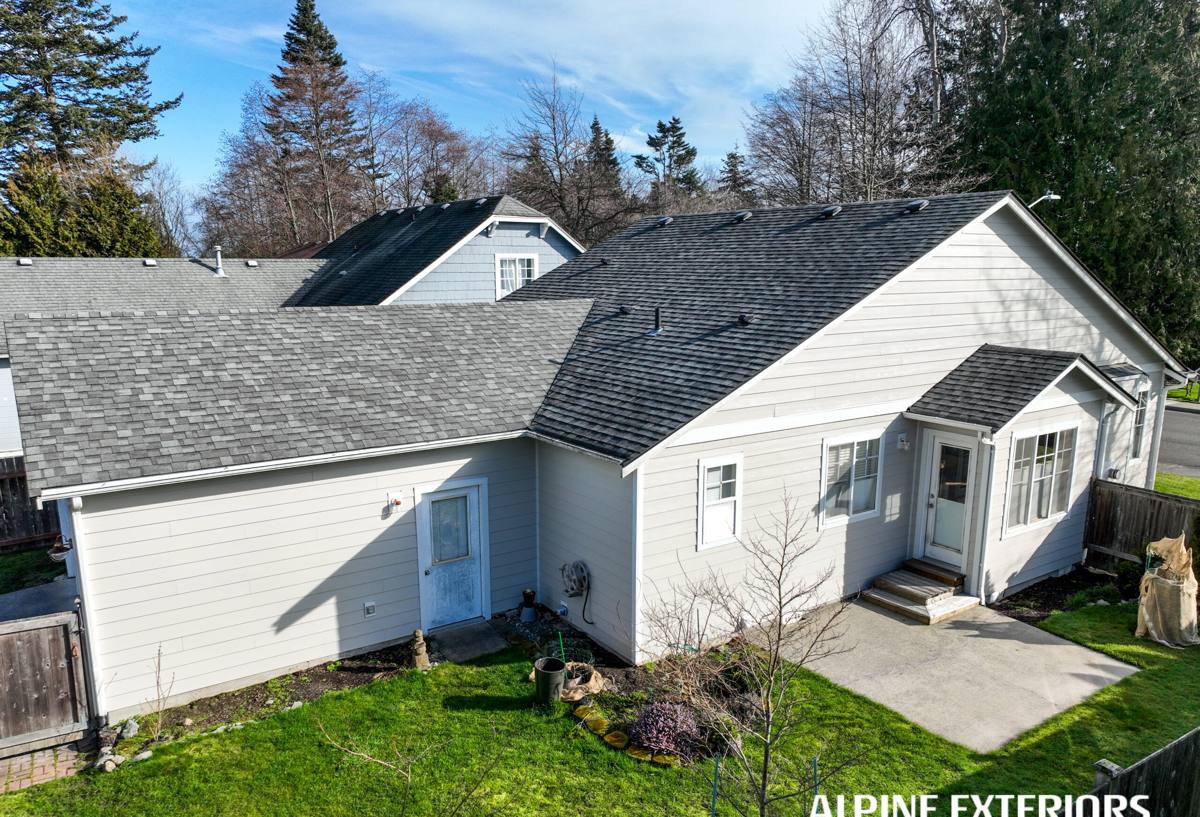
Why Salt Air, Driving Rain, and Moss Season Matter for Roof Choice
Salt Air
Airborne salt accelerates corrosion on any exposed metal component — fasteners, flashing, vent caps, and gutter hardware. It doesn't damage the shingles themselves the way it corrodes metal, but a roof is only as good as its weakest metal part. A rusted-through flashing detail or a failed fastener causes leaks long before the shingle field itself wears out.
Driving Rain
Wind-driven rain off the water doesn't fall straight down — it gets pushed sideways into laps, seams, and any transition point on the roof (chimneys, skylights, wall-to-roof intersections). A roofing system built for calmer inland conditions can rely on gravity and basic shingle overlap. A coastal roof needs every one of those transition points sealed and lapped as if the water is coming from the side, because on windy days it is.
Moss Season
Western Whatcom County's wet, mild winters are ideal moss conditions, and Sandy Point's tree cover and marine humidity stretch that season longer than it runs a few miles inland. Moss holds moisture directly against the roofing material, works its way under shingle tabs, and lifts them over time. Left unmanaged, it's one of the more common reasons a 25-year shingle roof needs replacement well ahead of schedule.
Signs a Sandy Point Roof Is Due for Replacement, Not Another Repair
- Granule loss showing up in gutters or at downspout outlets, especially after wind events
- Shingles that are cupping, curling at the edges, or visibly thinning
- Moss or algae staining that comes back within a season or two of cleaning
- Soft spots or sagging when walking the roof deck, which usually means deck rot underneath
- Rusted flashing, vent boots, or fasteners visible from the ground or attic
- Daylight visible through the roof deck from inside the attic
- Multiple past repairs in different spots — a sign the roofing system as a whole is aging out
- Interior water stains on ceilings, particularly near chimneys, skylights, or exterior walls
Any one of these doesn't automatically mean full replacement — some are legitimate repair situations. But on a coastal roof, we've found that once two or three of these show up together, patch repairs stop being a good value and a full new install starts making more financial sense.
What a Correct New Roof Installation Actually Involves
A new roof is more than swapping old shingles for new ones. The components underneath the visible surface are what determine whether the roof holds up to Birch Bay conditions or fails early. Here's what we build into every installation:
Full Tear-Off, Not Overlay
We remove the existing roofing down to the deck rather than laying new shingles over old ones. Overlaying hides deck problems, traps moisture between layers, and voids most manufacturer warranties. It's also the only way to properly inspect and repair the deck itself, which matters more here than in drier climates.
Deck Inspection and Repair
Once the old roofing is off, we check the sheathing for soft spots, rot, and delamination — common where past leaks went unnoticed under moss growth or failed flashing. Any compromised sections get replaced before anything new goes down. Skipping this step is the single most common shortcut that leads to early roof failure.
Ice and Water Shield at Vulnerable Points
Along eaves, valleys, and around roof penetrations, we install self-adhering waterproof membrane underneath the primary underlayment. These are the spots most likely to see wind-driven rain forced backward under the shingle line, and a membrane barrier here is cheap insurance against a very expensive leak.
Synthetic Underlayment Across the Full Deck
Synthetic underlayment sheds water more reliably than older felt products and holds up better to the intermittent UV exposure and repeated wet-dry cycling common on this coastline during construction and over the roof's life.
Corrosion-Resistant Flashing and Fasteners
Given the salt air, we don't treat flashing and fastener selection as a place to save money. Stainless or coated corrosion-resistant hardware at chimneys, valleys, sidewalls, and vent penetrations costs more up front and prevents the early, isolated leaks that salt-air corrosion causes in standard-grade hardware.
Balanced Attic Ventilation
Intake at the eaves and exhaust at the ridge, sized to move air through the entire attic space rather than leaving dead zones. Proper ventilation controls moisture buildup from inside the house and helps regulate deck temperature, both of which extend shingle life and reduce moss-friendly conditions on the roof surface.
Roofing Material Comparison for a Coastal Whatcom County Property
| Material | How It Handles Salt Air & Wind | Moss Resistance | Typical Lifespan Here |
|---|---|---|---|
| Architectural asphalt shingle | Good, with corrosion-resistant flashing and fasteners | Moderate — benefits from zinc/copper strips and regular cleaning | 20-25 years |
| Standing seam metal | Very good when properly coated; minimal seams for wind-driven rain to exploit | Good — sheds moisture quickly, less moss-friendly surface | 40-50+ years |
| Synthetic/composite shake | Good; doesn't absorb moisture like wood | Good | 30-40 years |
| Cedar shake | Requires diligent maintenance in marine climates | Poor without regular treatment — moss and rot risk is real | 15-25 years with upkeep |
We don't push one material on every home. Architectural shingles remain the most common choice for Sandy Point homes because they balance upfront cost with solid performance when the details underneath are done right. Metal roofing costs more initially but makes sense for homeowners planning to stay long-term or who want to minimize maintenance on a hard-to-access roof. Cedar shake can look great, but we're upfront that it demands more ongoing maintenance in this specific climate than most homeowners want to commit to — that's a maintenance trade-off, not a knock on the material itself.
Our Installation Process, Start to Finish
- On-site assessment: We inspect the existing roof, attic ventilation, and deck condition, and measure the roof to scope materials accurately.
- Written estimate: A clear breakdown of material choice, scope of work, and price — no vague allowances.
- Material staging: Materials are delivered and staged to minimize disruption to the property and landscaping.
- Tear-off and disposal: Old roofing is removed and hauled off; the deck is exposed for inspection.
- Deck repair: Any damaged sheathing is replaced before underlayment goes down.
- Underlayment and flashing installation: Ice and water shield at vulnerable points, synthetic underlayment across the field, and corrosion-resistant flashing at every penetration and transition.
- Roofing material installation: Installed to manufacturer specification, with attention to nailing pattern and exposure — details that affect wind resistance and warranty validity.
- Ventilation tie-in: Ridge and intake vents installed or verified to balance airflow.
- Final walkthrough: We review the completed roof with the homeowner and clean the property, including a magnetic sweep for stray fasteners.
Cost Factors on a Sandy Point Roof
Every roof is priced on its own specifics, but the variables that most often move the number on a coastal Birch Bay property are the same ones worth understanding before you get a quote:
- Roof size and number of squares (100 sq ft per "square")
- Roof pitch and accessibility — steep or high roofs take longer and require more safety setup
- Number of valleys, penetrations, and transitions (chimneys, skylights, dormers)
- Extent of deck repair needed once old roofing is removed
- Material choice — asphalt shingle, metal, or composite carry different material and labor costs
- Ventilation upgrades needed to bring an older attic system up to current standards
- Tear-off complexity — number of existing layers and disposal requirements
Straightforward asphalt shingle replacements on a simple roof shape are the most affordable option; steep, complex rooflines or a switch to metal roofing sit at the higher end. We give a firm written number after the on-site assessment, not a phone-quote guess.
Why a Crew That Already Works Sandy Point Matters
Roofing crews that mostly work drier, inland parts of the county sometimes underspec the coastal details described above — not out of carelessness, but because their standard specs are built for a different environment. On Sandy Point, that shows up later as a fastener that rusts through in a few years instead of holding for decades, or flashing that wasn't lapped aggressively enough for how hard wind-driven rain hits this shoreline.
Working this specific area regularly means we've seen how roofs actually age here, not just how they're rated to age on paper. We know which flashing details need extra attention on a Sandy Point roofline, how aggressive the moss growth gets under the tree cover common in this neighborhood, and what ventilation setup actually keeps attics dry through a Whatcom County winter with onshore wind. That's the kind of judgment that only comes from doing the work in this exact climate, not a general coastal-Northwest playbook applied everywhere.
Permits, Timeline, and What to Expect During the Project
Roof replacements typically require a building permit, which we handle as part of the project. Most single-family roof installations in this size range take one to three days on-site once materials are staged, weather permitting — and weather windows are the main scheduling variable on this coastline, since we won't install roofing materials in active rain. We plan around the forecast rather than pushing through it, because a roof installed in the wrong conditions is more likely to have problems down the line.
During the project, expect some noise, a staging area for materials and debris, and a work crew on the roof during daylight hours. We protect landscaping and siding during tear-off and do a full cleanup, including a magnetic nail sweep, before calling the job finished.
Get a Straightforward Estimate
If your Sandy Point roof is showing its age — moss that keeps coming back, granule loss, or a roof that's simply reaching the end of its expected life — we're glad to take a look and give you an honest read on repair versus replacement. Reach out for a free, no-pressure estimate using the form below.