 Birch Bay Siding
 Building Decks for Semiahmoo's Waterfront Conditions
Semiahmoo sits right at the edge of Semiahmoo Bay, close enough to the water that salt air, wind-driven rain, and near-constant marine moisture are part of daily life for homeowners here. That's a different set of demands than a deck built a few miles inland in Birch Bay proper or further into Whatcom County. A deck in this neighborhood needs to handle salt-laden air working on fasteners and finishes, driving rain that gets pushed sideways under roof overhangs, and a moss season that can run eight or nine months out of the year on any surface that doesn't drain and dry properly.
We build custom decks specifically with these conditions in mind — not a one-size-fits-all deck design dropped into a coastal lot, but a structure engineered around how water, salt, and organic growth actually behave in this exact location.
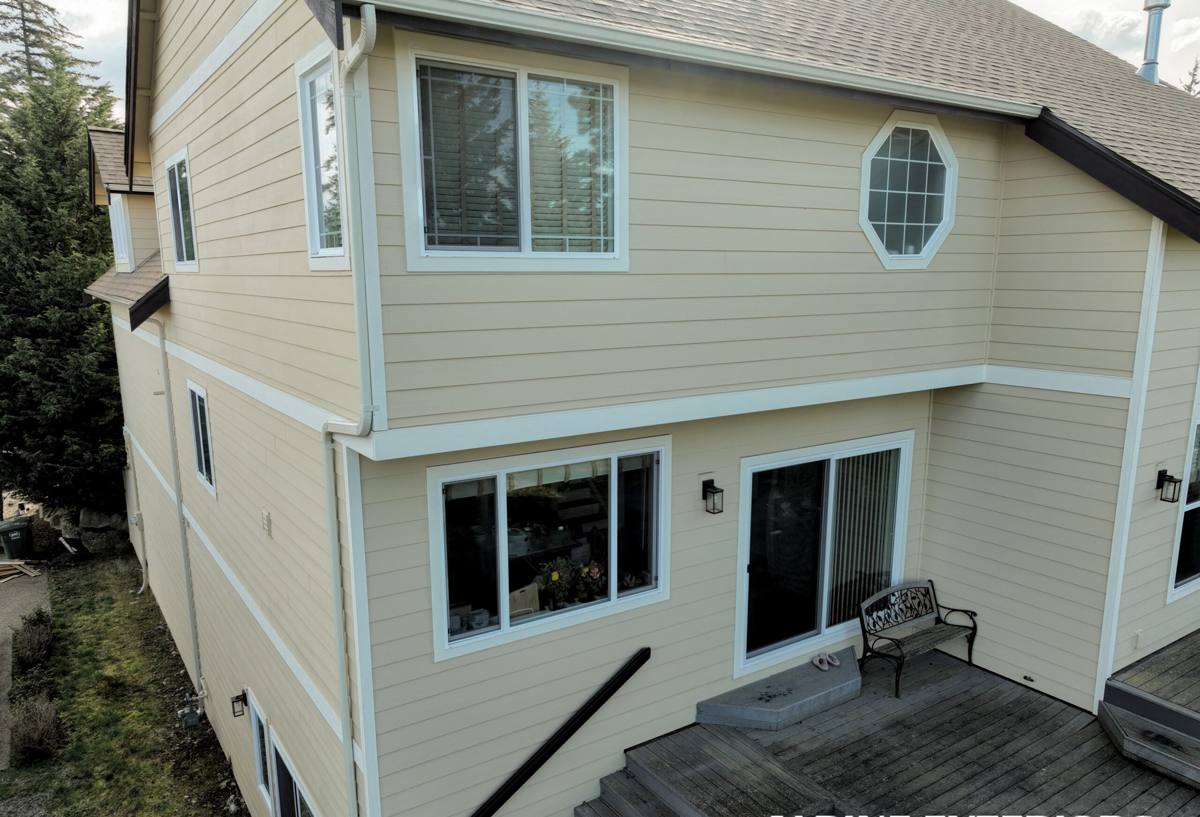
What Semiahmoo's Climate Does to an Ordinary Deck
If you've lived in Semiahmoo for any length of time, you've probably already seen what happens to decking, railing, and fasteners that weren't chosen or installed with the local environment in mind. A few of the most common patterns we see on service calls in this area:
- Corroded fasteners. Standard coated screws and nails can start showing rust streaks within a couple of seasons this close to salt water, especially on the water-facing side of a deck.
- Moss buildup in board gaps and on north-facing sections. Shaded areas that stay damp longer become moss magnets, and moss holds moisture against the wood or composite surface even longer, accelerating rot or surface degradation.
- Cupping and warping in lower-grade lumber. Wood that isn't properly dried or graded for exterior use will absorb and release moisture unevenly, leading to boards that cup, twist, or work loose from their fasteners.
- Railing and post-base corrosion. Metal post bases and railing hardware take the brunt of salt exposure, particularly on decks with an open water view where wind carries salt spray further inland.
- Slick, algae-covered surfaces. Beyond being unsightly, a mossy or algae-covered deck surface is a real slip hazard, especially on stairs.
None of this means a deck can't hold up in Semiahmoo — it means the material choices, fastener specs, and drainage details have to be right from the start, because retrofitting a poorly built deck after the fact is far more expensive than building it correctly the first time.
Design Considerations Specific to Semiahmoo Properties
Orientation and Wind Exposure
Many Semiahmoo lots have a clear line to the water, which means a deck design needs to account for prevailing wind direction and how much unobstructed exposure the structure will get. This affects everything from railing style (solid vs. open baluster) to how much wind-driven rain will hit the house-facing side of the deck versus the water-facing side.
Grade and Drainage
Coastal bluff and waterfront lots in this area often have more pronounced grade changes than a typical inland Birch Bay property. Proper footing depth, drainage planning underneath the deck, and correct ledger board flashing where the deck attaches to the house all matter more here, because water has to have somewhere to go besides sitting under the structure.
Shade and Moss Exposure
Tree cover and the orientation of neighboring homes can create shaded pockets on a deck that never get direct sun. We factor this into board spacing and surface material recommendations, since a shaded, damp section of decking needs more airflow underneath it than a section that gets afternoon sun.
Material Choices: What Actually Holds Up Here
There's no single "best" decking material for every project — it depends on budget, maintenance appetite, and how close to the water the deck sits. Here's an honest comparison of what we typically discuss with Semiahmoo homeowners:
| Material | Salt Air / Moisture Performance | Maintenance | Typical Lifespan |
|---|---|---|---|
| Pressure-treated fir/hem-fir | Fair — needs sealing and vigilant fastener choice | Annual cleaning and periodic re-sealing | 15-20 years with upkeep |
| Cedar | Good natural rot resistance, but surface grays and softens near salt spray | Regular cleaning, occasional oil or stain | 20-25 years with care |
| Composite decking | Very good — doesn't absorb moisture or support moss growth the way wood does | Periodic washing to clear surface algae/pollen | 25-30+ years, manufacturer warranty dependent |
| PVC decking | Excellent moisture and salt resistance | Low — occasional rinse | Long service life, higher upfront cost |
For fasteners and structural hardware, we default to stainless steel or heavy hot-dip galvanized rated for coastal/marine exposure rather than standard exterior-grade coated fasteners. It costs a little more up front, but replacing corroded fasteners on a finished deck means pulling boards apart — money far better spent getting it right the first time.
What a Correct Custom Deck Build Involves
A deck that's actually built for Semiahmoo's environment isn't just about picking good boards. The details underneath and around the visible surface matter just as much:
- Footings sized and set to Whatcom County code for the specific soil and frost conditions on your lot, not a generic minimum.
- Proper ledger flashing where the deck meets the house, so water is directed away from the wall assembly rather than trapped behind it.
- Joist spacing and blocking sized correctly for your chosen decking material — composite and PVC products often have tighter spacing requirements than solid wood.
- Corrosion-resistant structural hardware — joist hangers, post bases, and structural screws rated for coastal exposure.
- Ventilation gaps and proper board spacing so air can move underneath and between boards, which is one of the biggest factors in keeping moss and rot at bay.
- Stair and railing details that meet code for rise, run, and guard height, with hardware chosen for the same salt exposure as the rest of the structure.
Our Process for Semiahmoo Deck Projects
We keep the process straightforward and transparent, because homeowners deserve to know exactly what they're paying for and why:
- On-site assessment. We walk the property, look at grade, sun/shade exposure, wind direction, and any existing structure being replaced.
- Design and material conversation. We talk through your budget, maintenance preferences, and how close the deck sits to the water, then recommend materials that match those priorities honestly.
- Permitting. Deck projects in Whatcom County typically require a permit — we handle that process as part of the job rather than leaving it to you.
- Build. Footings, framing, decking, railing, and stairs, built to the details above rather than the minimum code allows.
- Final walkthrough. We go over care and maintenance specific to the materials we used, so you know what to expect in year one versus year ten.
Maintenance: What to Actually Expect Living This Close to the Water
Even a well-built deck in Semiahmoo needs some seasonal attention — the difference is that a correctly built deck needs far less of it, and problems show up as minor maintenance rather than structural failure. A realistic maintenance rhythm looks like:
- A rinse or light pressure wash a couple of times a year to clear salt residue, pollen, and early moss growth before it establishes.
- An annual check of railing hardware and fastener heads for any early corrosion, particularly on the water-facing side.
- Re-sealing or re-staining wood decking on the schedule the product calls for — typically every 1-3 years depending on sun exposure.
- Keeping gutters and downspouts near the deck clear, since overflow during the region's driving rain events is a common source of unexpected water exposure.
Why Hire a Crew That Already Works in Semiahmoo
A lot of deck problems we get called to fix didn't come from bad luck — they came from a design or materials list that was fine for a typical inland lot but wasn't matched to this specific stretch of coastline. A crew that regularly works Semiahmoo and greater Birch Bay already knows which fastener grades hold up here, how local wind and rain patterns hit different lot orientations, and what the Whatcom County permitting process looks like for waterfront and near-waterfront properties. That local knowledge shows up in fewer surprises during the build and a deck that's still doing its job a decade or two down the road, instead of a redo project.
Get an Honest Estimate for Your Semiahmoo Deck
Whether you're planning a full custom deck build, replacing an aging structure, or just want an honest read on what your current deck needs, we're happy to take a look. Reach out for a free, no-pressure estimate using the form below, and we'll walk the property with you and talk through options that make sense for your budget and your spot on the bay.