 Birch Bay Siding
 Why Semiahmoo Homes Wear Out Siding Faster
Semiahmoo sits right on the water, and that waterfront position is exactly what makes siding here behave differently than siding ten miles inland. Homes facing Semiahmoo Bay and Drayton Harbor take a steady dose of salt-laden air, wind-driven rain that hits walls sideways instead of falling straight down, and a damp shoulder season that runs long even by Whatcom County standards. Add in the shade from mature trees on many lots, and you get siding that stays wet longer after every storm and grows moss faster than almost anywhere else in the region.
None of that means siding is a losing battle in Semiahmoo. It means the product and the installation details matter more here than in a typical inland neighborhood. Get either one wrong and you're looking at swelling, soft spots, paint failure, or moss creeping up from the bottom courses within a few years. Get both right and the siding can handle decades of this exposure without drama.
What Salt Air Actually Does to a Wall
Salt air isn't just a coastal buzzword — it's airborne moisture carrying fine salt particles that settle on every exterior surface, including siding, trim, fasteners, and flashing. Over time it accelerates corrosion on anything metal that isn't rated for it, and it holds moisture against the siding surface longer than plain humid air would. On products that swell or delaminate when wet, that's a slow, steady problem. On non-combustible fiber cement, it's mostly a fastener and finish question — which is why we're careful about both on every Semiahmoo job.
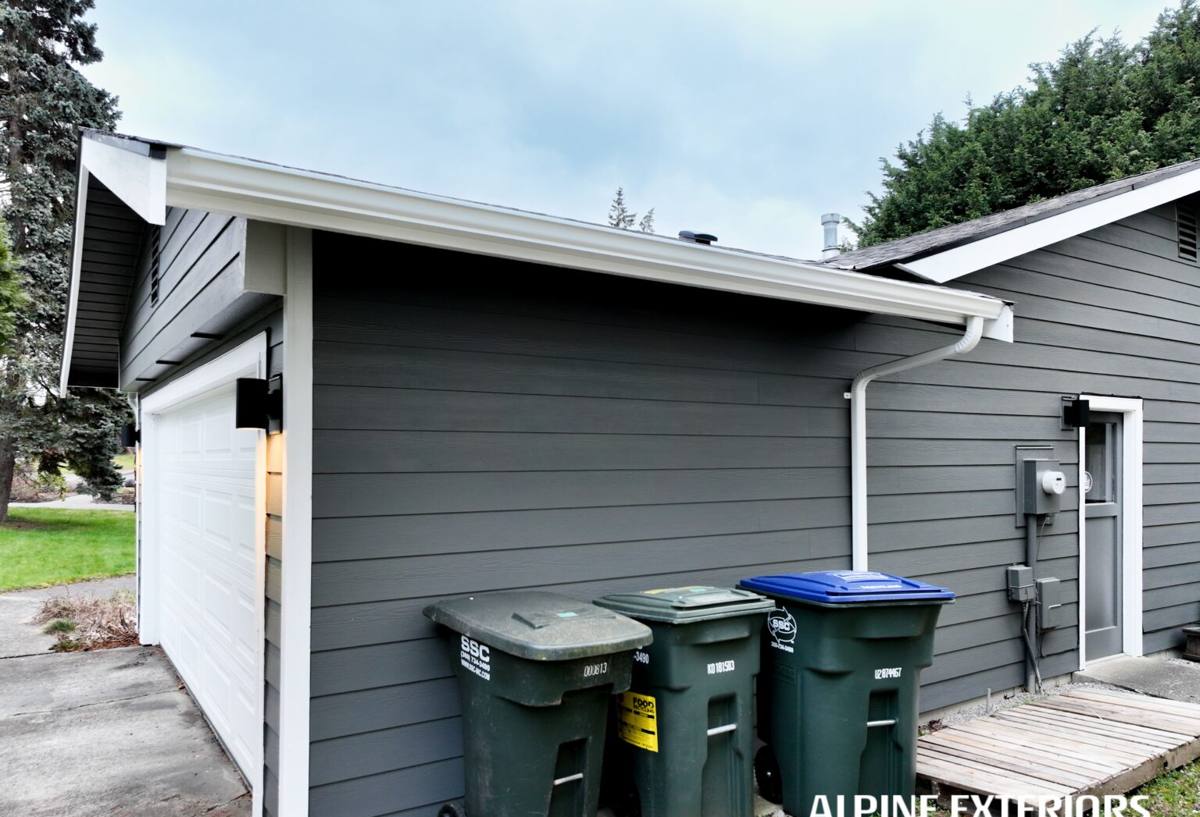
What a Correct Siding Installation Requires Here
A siding installation done right in Semiahmoo isn't dramatically different in concept from a good installation anywhere — but the margin for error is smaller. A few details that get treated as optional elsewhere are non-negotiable on a waterfront lot like this.
- Corrosion-resistant fasteners and flashing rated for coastal exposure, not standard galvanized hardware that starts rusting within a few seasons
- A proper weather-resistive barrier installed with correct lapping, so wind-driven rain can't work its way behind the siding at seams and penetrations
- Rainscreen or drainage gap detailing where the wall assembly calls for it, so any moisture that does get behind the cladding has somewhere to go
- Correct clearance between siding and grade, decks, and roof lines — a common shortcut that traps moisture right where moss and rot start
- Factory-finished panels and trim, so the protective coating isn't relying on a field-applied coat of paint to hold up against salt air
Skip any one of these and the siding itself can be the right product and still underperform. This is where a lot of installation problems in coastal Whatcom County actually start — not with a bad material choice, but with shortcuts on the details above.
Why We Install Only James Hardie Fiber Cement
We don't install vinyl, LP SmartSide, Cemplank, Allura, primed spruce, or cedar. That's a deliberate standard, not a sales pitch, and on a site like Semiahmoo the reasoning is easy to see. Vinyl expands and contracts with temperature swings and can crack or warp under sustained wind exposure. Wood-based products, including engineered wood siding and traditional cedar, depend on paint or sealant staying intact to keep moisture out — and on a wall that's wet more often than dry for half the year, that's a maintenance commitment most homeowners don't want to keep up with. Once moisture gets into a wood-based substrate, swelling and soft spots tend to follow.
James Hardie fiber cement is a cement-and-cellulose composite that doesn't absorb and swell the way wood-based siding can, and it's non-combustible — a real consideration for homes near dry brush or wildfire-prone summers, which Whatcom County does see. Hardie's ColorPlus factory finish is baked on under controlled conditions, which holds color and resists fading, chipping, and salt-air degradation far better than a field-applied paint job. It's also engineered in HZ5 and HZ10 formulations specifically for wetter, harsher climates, which is exactly the profile Semiahmoo fits. We standardized on it because it's the one product we can install once and trust to perform through the exposure this location actually gets.
Choosing the Right Hardie Product and Finish for This Site
Not every Hardie product or color is the right call for every wall on a waterfront lot. Part of our job is matching the product line to how exposed a given elevation actually is.
Product Line Considerations
HardiePlank lap siding is the most common choice for Semiahmoo homes and works well on most elevations when installed with the coastal-appropriate fastening and flashing details above. On homes with more architectural detail, HardieShingle or a mix of panel and board-and-batten styles can be used for accent walls or gables, provided the same moisture-management principles are followed everywhere the cladding meets a roof, deck, or grade line.
Color and Finish
Darker ColorPlus finishes absorb more heat and can show dust or salt residue differently than lighter colors, but the factory finish itself performs the same regardless of shade — it's baked-on and doesn't depend on field touch-up to hold its color. We'll walk through the ColorPlus palette and help you weigh appearance against how visible salt residue or moss staining might be over time on a given elevation, especially the north- and west-facing walls that tend to stay damp longest.
Our Installation Process
Every Semiahmoo project follows the same sequence, adjusted for the specific exposure of the lot.
1. Site and Exposure Assessment
We look at wind direction, water proximity, shading from trees, and the current condition of the wall assembly — including whether there's existing moisture damage behind the old siding that needs to be addressed before anything new goes up.
2. Removal and Substrate Check
Old siding comes off and we inspect the sheathing underneath. On waterfront homes it's not unusual to find soft spots or hidden moisture damage that has to be repaired before new siding goes on — installing over a compromised substrate just locks the problem in.
3. Weather Barrier and Flashing
A correctly lapped weather-resistive barrier goes on first, followed by flashing at every window, door, and penetration. This is the step that determines whether wind-driven rain actually stays out, and it's the step we won't shortcut regardless of schedule pressure.
4. Hardie Installation to Manufacturer Spec
Panels and trim go up with corrosion-resistant fasteners, correct nailing patterns, and proper clearances from grade, roofing, and decking. We follow James Hardie's published installation instructions because that's what keeps the manufacturer warranty intact — installed off-spec, even the best product underperforms.
5. Final Walkthrough
We walk the finished job with you, check caulking and trim details, and go over basic care specific to a waterfront property.
Cost Factors for a Semiahmoo Siding Project
Every home is different, but these are the variables that most affect the scope and cost of a siding installation on a waterfront lot like Semiahmoo.
| Factor | Why It Matters Here |
|---|---|
| Substrate condition | Hidden moisture damage from years of salt air and rain exposure often means sheathing repair before new siding goes on |
| Wall exposure | North- and water-facing walls may need additional flashing or drainage detailing beyond a standard installation |
| Product line and profile | Lap siding, shingle-style accents, and board-and-batten details carry different material and labor costs |
| Trim and accessory scope | Fascia, soffit, and trim replacement alongside siding affects both material needs and crew time |
| Access and site conditions | Waterfront lots can have tighter access, slopes, or landscaping that affect setup and staging |
We provide a written estimate after walking the property so you're pricing your actual home, not a regional average.
Living With Hardie Siding on a Semiahmoo Waterfront Lot
Correctly installed Hardie siding is low-maintenance, but "low" isn't "none," especially in a moss-prone climate. A short list of what actually helps:
- Rinse siding periodically to clear salt residue and airborne debris, especially on walls facing the water
- Keep gutters clear so overflow doesn't run down the wall and feed moss growth at the top courses
- Trim back vegetation and tree cover where it's keeping a wall shaded and damp longer than the rest of the house
- Check caulking at trim and penetrations every year or two and have gaps resealed before they become entry points
- Address any moss or dark staining early — it's a symptom of a wall staying wet, not just a cosmetic issue
Why a Crew That Already Works Semiahmoo Matters
Siding installation is one thing on paper and another thing on an exposed waterfront lot in Whatcom County. A crew that already works this specific stretch of coastline has seen how these homes actually age — which walls take the worst of the wind, where moss shows up first, which flashing details get overlooked most often. That's the kind of judgment that doesn't come from a spec sheet, and it's the difference between a siding job that looks right on installation day and one that's still performing after fifteen winters of salt air and driving rain.
If you're weighing a siding replacement or new installation on your Semiahmoo home, we're glad to walk the property with you, look honestly at what your walls are dealing with, and give you a straight answer on what a correct job involves. Reach out for a free, no-pressure estimate using the form below.