 Birch Bay Siding
 Windows Built for the Terrell Creek Stretch of Birch Bay
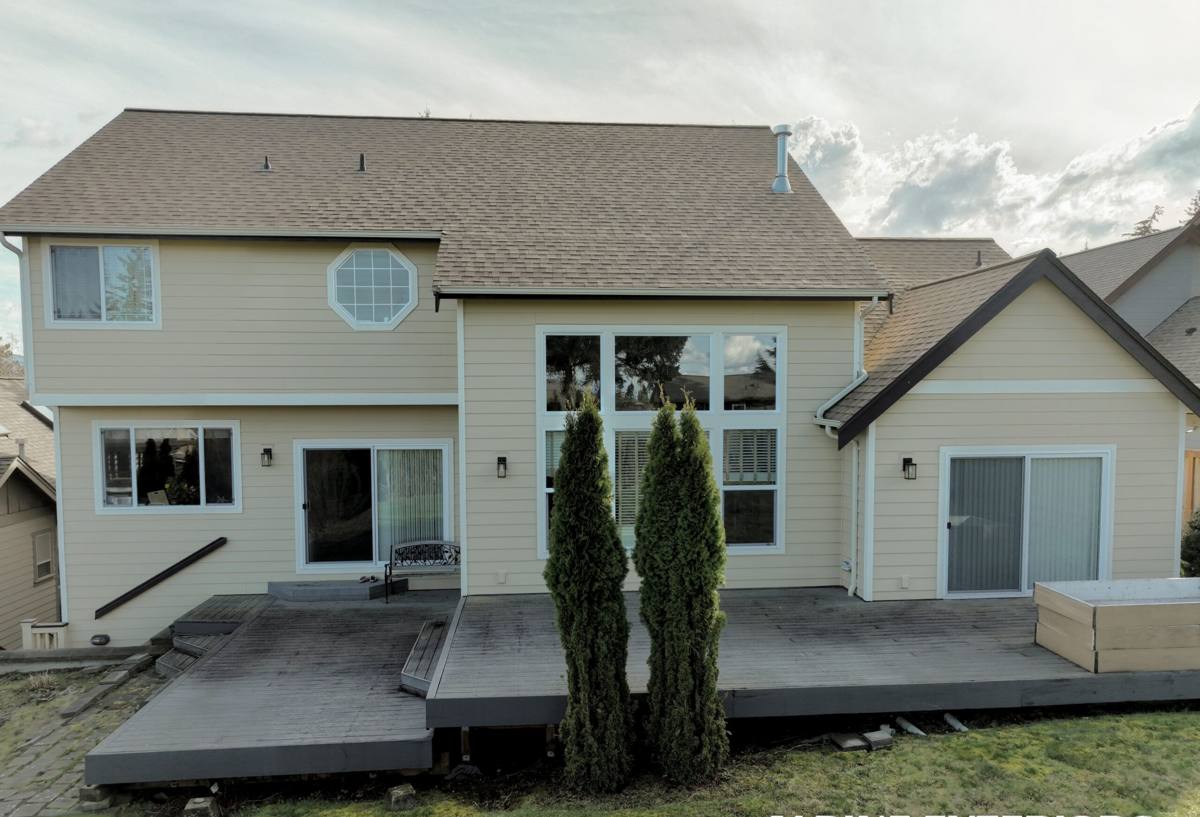
The Terrell Creek area sits in that in-between zone many Birch Bay homeowners know well — close enough to the water to catch salt-laden air off the bay, low-lying enough to hold moisture through the winter, and shaded enough in spots to grow moss on anything that stays damp too long. Windows here work harder than windows a few miles inland in Ferndale or Lynden. When we replace windows in this part of Whatcom County, we're not just swapping glass and frames — we're addressing a specific set of conditions: driving rain off the Strait of Georgia, salt corrosion on hardware and fasteners, and a moss and mildew season that can run eight months out of the year.
This page covers what window replacement actually involves for homes in and around Terrell Creek — what to look for, what a correct installation includes, and why local experience matters more here than it does in drier parts of the county.
What the Local Climate Does to Windows
Salt Air and Hardware Corrosion
Homes within a mile or two of Birch Bay's shoreline take on airborne salt that settles on window hardware, screen frames, and exterior trim. Over years, that salt accelerates corrosion on lower-grade fasteners, hinges, and locking mechanisms. It's a slow process, so it's easy to miss until a window won't latch properly or the frame shows pitting around the hardware.
Driving Rain and Wind-Driven Moisture
Storms coming off the water don't just fall straight down — wind pushes rain sideways into window assemblies, testing flashing and sealant details that a calmer climate would never stress. A window that's watertight in a still rain can still leak in a Birch Bay windstorm if the flashing wasn't lapped correctly or the sill pan wasn't sloped to drain.
Moss, Mildew, and Trapped Moisture
Shaded lots near the creek and tree-lined streets stay damp longer after a storm than open, sunny lots. That moisture holds against window frames, sills, and the wood trim around older windows, feeding moss and mildew growth and, eventually, wood rot if it's not addressed. Vinyl and fiberglass frames resist this better than bare wood, but even they need proper drainage details to shed water instead of holding it.
Signs a Terrell Creek Home Needs Window Replacement
- Fogging or condensation between panes — the seal has failed and the insulating gas has escaped
- Soft or discolored trim around the window frame, especially on the north or west-facing sides
- Hardware that's stiff, corroded, or won't latch fully closed
- Visible gaps or drafts you can feel with a hand near the frame on a windy day
- Moss or dark staining building up on the sill or lower frame
- Windows that are noticeably harder to open than they used to be, often from swollen wood or warped vinyl
- A noticeable jump in heating costs without any other explanation
Any one of these can be minor on its own. Two or three together usually means the window's service life is ending and repair will just delay a replacement that's coming anyway.
What a Correct Installation Looks Like
Window replacement is one of those jobs where the parts you can't see matter more than the parts you can. A window that looks great from the curb can still leak for years if the flashing and sealing underneath weren't done right. For homes in the Terrell Creek area, we pay particular attention to:
Flashing and Water Management
Every opening gets flashed so that water sheds outward and downward, never behind the siding. That means correctly lapped flashing tape, a sloped sill pan so any water that gets past the window drains back out instead of pooling, and careful integration with the existing weather-resistive barrier so we're not creating a new path for moisture to get behind the wall.
Sealant and Fastener Selection
Given the salt exposure this close to the bay, we use fasteners and hardware rated for coastal or marine-adjacent conditions rather than standard interior-grade hardware. Cheaper fasteners corrode faster here than they would inland, and a corroded fastener at a flashing point is a future leak.
Frame Material Choice
Vinyl and fiberglass frames handle this climate better than bare wood because they don't absorb moisture or require repainting to stay protected. Where wood-look interiors are wanted, we use wood-interior/vinyl or fiberglass-exterior combination windows so the exterior face — the part exposed to salt air and rain — never depends on paint to stay sealed. We steer customers away from all-wood exterior frames in this specific area not because wood is a bad material in general, but because the maintenance burden of keeping painted wood sealed against this much moisture is a real, recurring cost most homeowners don't want to sign up for.
Insulation and Air Sealing
The gap between the new window frame and the rough opening gets properly insulated and air-sealed — not just stuffed with fiberglass, which settles and leaves gaps. A well-sealed gap is a big part of why a new window actually performs better than the old one, beyond just the glass itself.
Comparing Window Options for This Area
| Frame Type | Salt Air / Moisture Resistance | Maintenance | Typical Fit for Terrell Creek |
|---|---|---|---|
| Vinyl | Good — won't rot or corrode | Low — occasional cleaning | Strong value option, widely used in this area |
| Fiberglass | Very good — dimensionally stable, resists warping | Low | Good for larger openings or higher wind exposure near the water |
| Wood-interior / clad-exterior | Good on the exterior face if the cladding is intact | Moderate — interior wood still needs occasional attention | Works when a wood interior look is wanted, with a protected exterior |
| All-wood | Poor without diligent repainting and sealing | High — regular repainting and sealant checks | Not our recommendation this close to the bay |
None of these are wrong choices in every context — an all-wood window in a dry, inland climate can last decades with basic care. The table reflects how each option holds up specifically under Birch Bay's salt air and rain load, which is the condition Terrell Creek homes actually face.
Our Process for Terrell Creek Jobs
1. On-Site Assessment
We look at each opening individually — sun and wind exposure vary block to block near the creek and the shoreline, and a window on the water-facing side of a house often needs a different sealant and flashing approach than one on a sheltered side.
2. Measurement and Product Selection
We measure precisely and match frame material, glass package, and hardware to the specific exposure of that opening, not a one-size-fits-all spec for the whole house.
3. Removal and Opening Prep
Old windows come out carefully so we can inspect the rough opening for hidden rot or moisture damage before anything new goes in. This is often where we find the real story behind a "just replace the window" call — sometimes there's sill or framing damage that needs to be addressed first.
4. Installation, Flashing, and Sealing
New windows go in level, plumb, and properly flashed, with fastener and sealant choices suited to this coastal-adjacent climate.
5. Final Check and Cleanup
We test operation, check the seal from inside and out, and leave the site clean.
Why Hire a Crew That Already Works This Area
Window replacement isn't identical everywhere in Whatcom County. A crew that mostly works drier inland neighborhoods may not think twice about fastener grade or flashing sequence in a way that matters here — and it usually doesn't show up as a problem until a few winters have passed. A crew that regularly works the Birch Bay shoreline and the Terrell Creek area already knows which details can't be skipped: the flashing sequence that handles wind-driven rain, the hardware that won't corrode in salt air, and the drainage path that keeps moss and standing moisture from building up on a sill. That's not a marketing point — it's the difference between a window that's still tight in ten years and one that's leaking again in three.
What Replacement Windows Typically Cost
Costs vary based on window size, frame material, glass package, and how many openings you're doing at once. As a general guide for this region:
- Standard vinyl replacement windows: modest per-window cost, the most common choice for whole-house replacements
- Fiberglass or larger custom openings: a step up in cost, often chosen for water-facing or high-wind sides of the house
- Wood-interior/clad-exterior windows: a premium option, chosen for appearance where the interior wood look matters
- Full-house replacement projects typically see per-window pricing come down slightly compared to doing one or two windows at a time
We give exact numbers only after seeing the actual openings — stated ranges without an on-site look aren't reliable, especially when rot repair or flashing work turns out to be needed once the old window comes out.
Get a Free Estimate for Your Terrell Creek Home
If your windows are showing their age — fogging, drafts, stiff hardware, or moss building up on the sills — it's worth having a local crew take a look before another wet Whatcom County winter sets in. We'll assess your specific openings, explain what we find, and give you a straightforward, no-pressure estimate. Use the form below to request your free estimate.